Choosing a restaurant POS, and separating it from the payments.
Most restaurant POS deals bundle software, hardware and card processing into one agreement. The software is usually the thing you are choosing on and the processing is usually the larger long-term cost, so it is worth pricing them separately even when you cannot buy them separately.
What this page settles.
Three questions, in the order most people ask them.
What you are actually choosing
A restaurant POS quote usually contains three separate products sold as one.
The software — table management, menu and modifiers, kitchen printing or displays, staff and shift handling, reporting, stock. This is what you will be looking at, and rightly.
The hardware — terminals, handhelds, kitchen printers, cash drawers, the mounting. Sold, rented or financed.
The card processing — frequently locked to the POS provider, and frequently the largest long-term cost of the three.
The third one is the one that gets least attention in the room and most of your money over three years. Not because anyone is hiding it, but because the demo is about the software and nobody runs the processing arithmetic in a sales meeting.
The lock, which is the expensive part
Ask this before anything else: can I use my own processor with this system, now and in future?
Three possible answers and they are very different.
Open. The POS works with multiple processors and you choose. You can negotiate processing independently and change it later without changing your software.
Locked. Processing comes from the POS provider and that is the deal. The software is often excellent and you have given up the ability to shop the larger cost, permanently, for the life of the system.
Technically open, practically discouraged. Integration available with other processors, at a fee, with less support, or only on certain plans. Worth probing, because the answer in the room is often warmer than the answer in the contract.
None of these is automatically wrong. A locked system with good software and fair processing is a reasonable purchase. A locked system where nobody will quote you markup over interchange is a decision you will be living with for three years.
Run the three-year number. Software at a monthly fee against processing on your real volume. For most restaurants doing meaningful volume, the processing is several times the software over the term — and it is the half nobody puts in the comparison spreadsheet.
What the software genuinely needs to do
Worth writing down before any demo, because every system demos well.
The non-negotiables for most restaurants: table and course management if you are full service, modifiers that match how your kitchen actually works, kitchen printing or screens, split bills and split payments, tip handling that is quick at the end of a shift, and staff permissions.
The things that matter more than people expect: how fast a server can take an order on a busy Friday, what happens when the internet drops, how long a shift close takes, and whether your least technical staff member can use it under pressure.
Tip handling specifically. Restaurant processing cost concentrates in the tip adjust, and a system that makes nightly tip entry quick and hard to forget is worth real money. Ask to see the end-of-shift flow, not just the order flow.
Offline mode. When the connection drops mid-service, does the system keep taking orders and payments and sync afterwards, or does trading stop?
What happens to your data if you leave. Menu, customers, sales history. Ask now.
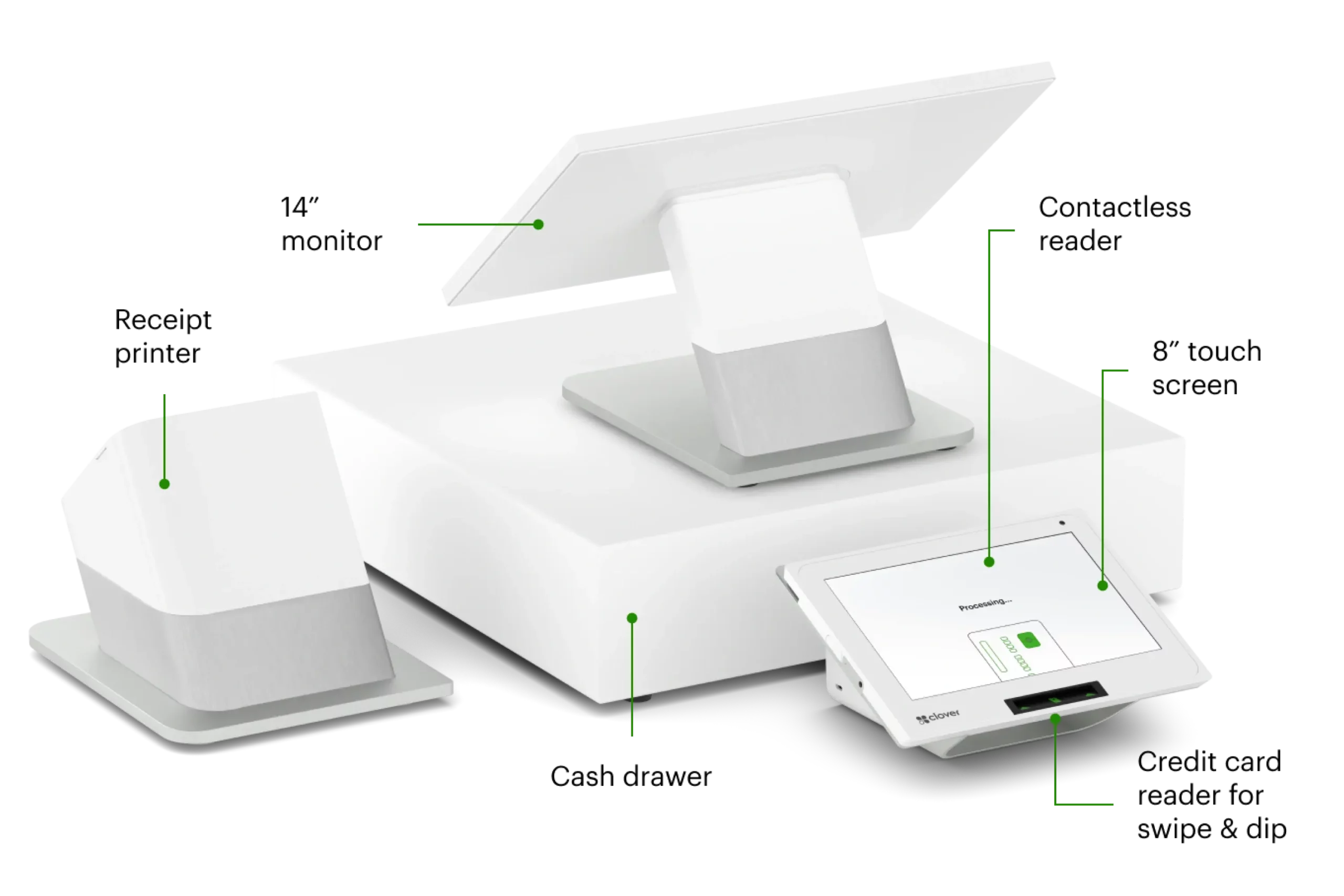
Hardware, and the lease question
Three ways to get it, and the words get used loosely.
Buy. Highest up-front, lowest total, and it is yours.
Rent. Month to month, cancellable, equipment returned.
Lease. Low monthly, long term, usually non-cancellable, frequently personally guaranteed, and it survives the software contract ending. This is routinely the most expensive element in a restaurant POS deal and the least examined. The full warning.
If hardware is being offered free, establish which of the three “free” means. Free-with-a-lease is not free; it is finance with the interest in the monthly figure.
And ask what happens if a terminal fails on a Saturday night. Replacement time and cost, in writing.
Questions before you sign
- Can I use my own processor, now and later?
- What is the processing markup over interchange, and the per-item fee?
- What is the software cost, monthly, per terminal?
- Is the hardware purchased, rented or leased, and what is the total over the term?
- What is the contract term on each of the three, and are they the same?
- What does support cost, and what are the hours?
- What happens to my data if I leave?
Then do one thing: add it up over three years. Software plus hardware plus processing on your actual volume. Compare that with the same sum for an open system plus processing bought separately.
Sometimes the bundle wins. Often it does not, and either way you will have made the decision with the number in front of you.
What we charge
Interchange + 0.50% + 10¢ in person, interchange + 0.75% + 25¢ keyed, with no contract and no monthly fee. We support open systems where you can choose your processor, and we will tell you plainly when a locked system’s bundled pricing is competitive — some of them are.
Send us a POS quote and we will separate the software from the processing over the term, so you can see which one you are actually buying.
While we are on the subject
Can I use my own processor with any restaurant POS?
Some are open, some are locked, and some are technically open but priced to discourage it. This is the single most important question to ask and the one most often answered vaguely.
Is an all-in-one deal bad?
Not inherently. Integrated hardware, software and support from one supplier is genuinely simpler. The question is what the bundle costs over the term versus buying the parts.
How long are these contracts?
Frequently two to three years for the software, with hardware on a separate finance agreement that may run longer. Both need reading before either is signed.
Should I take the free hardware?
Find out what free means. If it is a lease, it is the most expensive thing in the deal and it outlives the software contract.