A terminal or a full system, and how to tell which you need.
The honest test is whether you need the software for anything other than taking money. If the answer is no, a terminal is cheaper, simpler and easier to replace — and nobody selling point-of-sale systems will suggest it.
What this page settles.
Three questions, in the order most people ask them.
What each one actually is
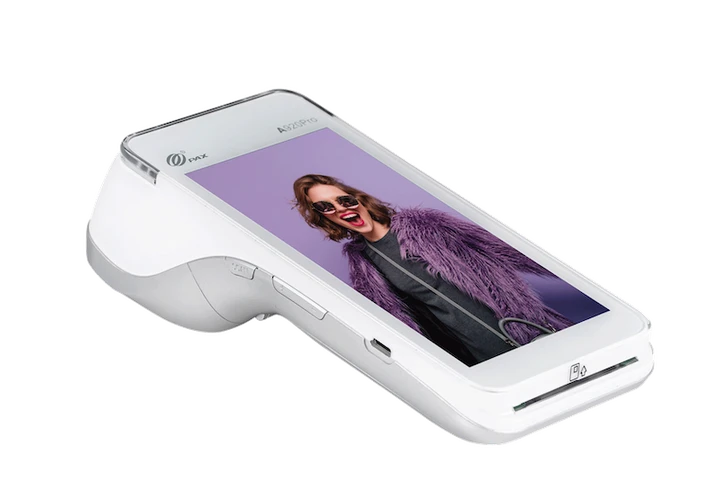
A card terminal takes a card, authorizes it, settles it, and prints a receipt. Modern ones handle tips, refunds, contactless and chip, and connect over wi-fi, ethernet or mobile data. That is the job.
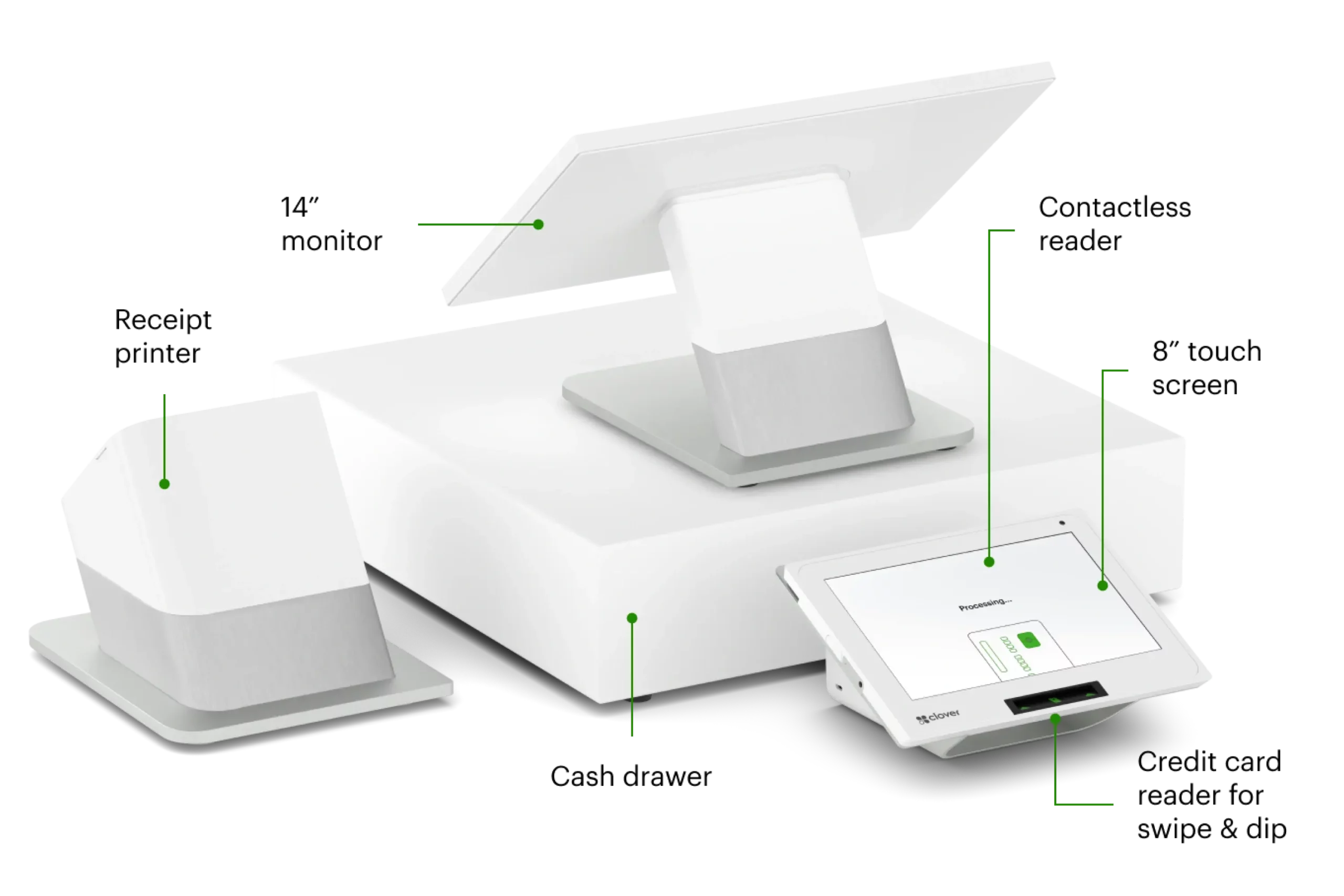
A point-of-sale system is software that runs the business, with payment as one of its functions. Products and prices, stock levels, staff and shifts, reporting, customers, and integrations with accounting or ordering platforms. It usually runs on a tablet or a dedicated till and has a card reader attached.
The practical differences:
Cost. A terminal is a few hundred dollars once. A POS is a monthly subscription per station, usually with a contract.
Commitment. A terminal can be swapped. A POS is the system your whole operation runs on, and changing it is a project.
Complexity. A terminal needs no setup beyond installation. A POS needs your menu or catalogue built, your staff trained, and someone who maintains it.
The test
One question: do you need software for anything other than taking money?
No — a terminal will do. You know your prices. You do not track stock through the till. You do not need shift reporting beyond a daily total. Your accounting works fine from bank statements and receipts. This describes a great many small businesses, including most trades, market stalls, mobile services, small salons and plenty of single-counter shops.
Yes — you need a system. Inventory that has to be accurate. Multiple staff whose sales you need to separate. Table service with courses and splits. Product-level reporting. Integrations with accounting, e-commerce or ordering platforms. Several locations.
In between. A business that would like better reporting but does not need it operationally. This is the group that most often overbuys, and the honest advice is to start with a terminal and move when the absence of the software is actually costing you something.
Why the cheaper answer rarely gets suggested
Worth naming, because it affects the advice you will get.
A terminal is a one-off sale of a few hundred dollars. A point-of-sale system is a multi-year subscription with hardware attached and frequently locked card processing on top. The commercial incentive runs entirely one way.
That does not make POS vendors dishonest. It does mean the question “would a terminal do?” is not one a POS salesperson is likely to raise, and it is the question with the most money in it.
The version that is genuinely worth watching for is free hardware attached to a long agreement. Free usually means a lease, and a lease is the most expensive thing in most of these deals and outlives the software contract.
The PCI side of it
An underrated difference.
A standalone terminal connecting directly to the processor keeps card data entirely out of your systems. Your annual questionnaire is one of the shortest available.
A POS on your network, particularly one running on general-purpose computers, brings more into scope. Longer questionnaire, possibly quarterly scanning, and more to get wrong. Which SAQ applies.
That is not a reason to avoid a POS if you need one. It is a real cost of having one, paid annually in time rather than money, and it belongs in the comparison.
When a terminal stops being enough
Five honest signals:
You are counting stock by hand and getting it wrong.
You cannot tell which products or staff are performing and that is affecting decisions.
Your bookkeeping takes hours that a till export would remove.
You are running table service from memory and paper, and service is suffering for it.
You have a second location, or are about to.
Any of those and the software is buying you something. None of them and you are buying a monthly fee, a contract, and a longer compliance questionnaire, to do a job a terminal does.
What we charge
Interchange + 0.50% + 10¢ in person, interchange + 0.75% + 25¢ keyed, with no contract, no monthly fee and no monthly minimum.
We sell and support both, and the terminal is the smaller sale. Tell us what your day actually looks like and we will tell you which you need — including when the answer is the cheaper one.
While we are on the subject
Can a terminal do tips?
Yes. Standalone terminals handle tipping and tip adjustment. What they do not do is table management, course timing or kitchen printing.
Is a tablet with a card reader a POS?
Usually yes in the sense that matters — there is software managing the business alongside the payment. Whether it is the right one is a separate question.
Can I start with a terminal and move later?
Yes, and for many new businesses that is the sensible sequence. A terminal is a small purchase; a POS is a contract.
Does a POS get me better rates?
No. Rates come from your processor, not your hardware. A bundled POS deal may quote a rate, and it is worth comparing like any other.