Countertop, mobile or integrated, decided by where you stand.
The shape follows the job. A fixed counter wants ethernet and reliability; a mobile trade wants cellular and battery; a business with a point-of-sale system wants the reader to talk to it. Mixing those up is the common mistake.
What this page settles.
Three questions, in the order most people ask them.
Countertop
A fixed unit that sits by the till and connects by ethernet or wi-fi.
What it is good at: reliability. An ethernet-connected countertop terminal is the most dependable way to take a card payment, full stop. No battery to charge, no signal to lose, no pairing to re-establish on a busy Saturday. For a shop, a bar, a pharmacy, a counter of any kind, this should be the default.
What it is not good at: going anywhere. Which matters more than people expect in restaurants, where the alternative is walking a customer’s card to the till, and in any business where customers sometimes pay away from the counter.
What to specify: ethernet if you possibly can; chip, contactless and PIN as standard; and a model from a mainstream manufacturer that is widely certified, so the device can move with you if you change processors later. Can I keep my terminal.
Mobile and wireless
A handheld unit with a battery, connecting over wi-fi, cellular, or both.
What it is good at: going to the customer. Table service, a trade visiting a home, a market stall, a delivery, a queue-busting second till on a busy day. For restaurants specifically, paying at the table rather than at a till is both faster and — because the card never leaves the customer — better for disputes. Restaurant processing.
What it is not good at: being forgotten about. It has a battery, it needs charging, and a dead handheld at 7pm on a Friday is a worse problem than a dead countertop because nobody noticed it draining.
Cellular versus wi-fi is the choice that actually matters. Cellular costs a few dollars a month — Stripe publishes $10 per reader per month for Terminal cellular, as one published example — and it works where your wi-fi does not, including outside your building. For a mobile trade, cellular is not optional. For a fixed site with patchy wi-fi, it is often the fix.
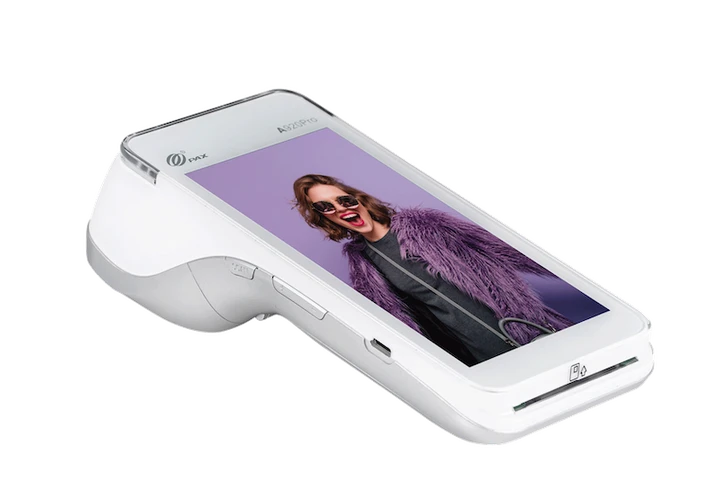
Android-based handhelds blur the categories usefully: a full touchscreen device with a receipt printer and cellular that works on a counter and in the field. More expensive, more capable, more to go wrong.
Integrated readers
A reader that connects to a point-of-sale system rather than standing alone.
What it is good at: removing the re-keying step. The till sends the amount to the reader, so nobody types $45.00 as $4.50. That single thing removes the most common source of till errors and the reconciliation work that follows them. It also means refunds, reporting and end-of-day reconciliation all live in one system.
What it is not good at: independence. An integrated reader is part of a system, and when the system is down the reader is usually down with it. It is also normally tied to whatever processing the point-of-sale vendor supports, which is the clause worth settling before you buy the system rather than after. Choosing a retail POS.
Only relevant if you have a point-of-sale system, which is a separate and prior question. Terminal or POS?
The PCI angle: an integrated reader on a network brings more into scope than a standalone terminal talking directly to the processor. Worth knowing as a real annual cost in time. Which SAQ do I need.

Taking payment on a phone
Worth including because for a growing number of businesses it replaces one of the categories above entirely.
Modern phones can read contactless cards and wallets using their own hardware — no reader at all, card-present rates, nothing to charge separately. For a mobile trade, a market stall or a second till on a busy day, it removes the hardware question.
What it cannot do: read a chip card that has to be inserted, take PIN debit in most implementations, or work when your phone is flat. Which is why the sensible mobile setup is usually a phone plus a small reader rather than either alone. Tap to pay on a phone.
The connection question
Decide this deliberately rather than by default, because it causes more day-to-day grief than the choice of device.
Ethernet is the most reliable and the right answer for any fixed counter that can reach a cable.
Wi-fi is fine with good coverage and a nuisance without it. If your terminal is at the far end of a shop from the router, test it before committing.
Cellular costs a few dollars a month and is worth it for mobile trades, for sites with unreliable broadband, and as a backup on a fixed site.
Dual connectivity — a device that falls back from wi-fi to cellular — is the quietly correct answer for a business that cannot afford to stop taking cards, and it is worth asking for by name.
The backup question
The one nobody asks, and the one that costs the most when it bites.
What happens on a Saturday when the terminal dies or the internet drops? For a single-till business with no answer, the answer is that you stop taking cards, and a lost day of trade costs more than the backup would have.
Three reasonable answers:
A spare terminal. A few hundred dollars, and it pays for itself the first time.
A cellular device as backup to a wired primary, so a broadband outage does not stop you.
Tap to pay on a phone as a fallback, which costs nothing to have ready.
Offline or store-and-forward mode exists on some devices — transactions are held and submitted when the connection returns — and it is a genuine capability with genuine risk: you are accepting payments without authorisation, so you learn about declines afterwards and you own the losses. Useful for brief outages, not a substitute for a working connection, and worth asking your provider about its specific limits before relying on it.
What we charge
Interchange + 0.50% + 10¢ in person, interchange + 0.75% + 25¢ keyed, with no contract, no monthly fee and no monthly minimum. We sell hardware outright and we do not lease equipment.
Tell us what your day actually looks like — where you stand when you take money, what your internet is like, whether you have a point-of-sale system — and we will tell you which shape you need, including when the answer is a phone and no hardware at all.
While we are on the subject
Is a wireless terminal less reliable?
Over wi-fi, sometimes — it depends on your coverage. Over cellular, usually very reliable, and it keeps working when your broadband does not, which is why some fixed sites keep one as a backup.
Do I need an integrated reader?
Only if you have a point-of-sale system. The benefit is that the amount is sent to the reader automatically, which removes the most common source of till errors.
Can one terminal do everything?
An Android-based handheld with cellular comes closest — it works on a counter and in the field. It costs more than a basic countertop unit and has a battery to manage.
What happens if the internet goes down?
Depends on the device and the setup. Some store transactions and forward them later, with real limits and real risk. A cellular backup is usually the better answer.