Choosing a retail POS, by the two things you will actually use.
A retail POS earns its subscription through accurate inventory and honest reporting. Everything else on the feature list is either table stakes or something you will never open. Pick on those two and on how locked the payment processing is.
What this page settles.
Three questions, in the order most people ask them.
What actually justifies the subscription
A retail POS costs somewhere between $60 and $200 a month per station plus hardware. Two features earn that back. The rest is either standard across every option or something you will open twice.
Inventory that stays accurate. This is the whole case. Stock counts that match reality mean you stop running out of the things that sell and stop reordering the things that do not. If you currently count by hand, or guess, or find out you are out of something when a customer asks, the inventory function is paying for the subscription on its own.
What makes inventory actually work, as opposed to nominally exist: receiving against purchase orders, so stock arrives into the system rather than being typed in; variants handled properly, if you sell sizes or colours; and a count function you will genuinely use for cycle counts rather than one annual stocktake.
Reporting you will read. Not “reporting”, which every system has. Reporting at the grain that changes a decision: sell-through by product, margin by category, hours and days by revenue. The test is whether you can imagine opening it on a Monday morning. If you cannot, that feature is worth nothing to you and you should not pay for it.
Everything else — barcode scanning, label printing, receipt email, customer records, discounting, staff logins — is present in every option at this price. It does not differentiate and it should not drive the decision.
The processing lock
This is the clause that costs the most money and appears on the fewest comparison sheets.
Some retail POS systems require you to use their card processing. Some allow outside processors. Some allow it technically and price it punitively. The difference compounds over years and dwarfs the subscription.
Work out the number before you sign. Take your monthly card volume and your average ticket. Price the bundled rate against an interchange-plus rate from an open processor. A shop doing $45,000 a month at a bundled 2.6% flat versus interchange-plus at an effective 2.25% is $157 a month — more than the POS subscription itself, every month, for as long as you run the system.
That does not automatically make locked systems wrong. An integrated system you will not fight with has real value, and some bundled rates are genuinely competitive at low volume. What is wrong is signing a multi-year system commitment without knowing what the payment side costs, because the system commitment is what makes the payment cost unchangeable.
Three questions:
Can I use my own processor, now or later?
If I can, is there a surcharge or an integration fee for doing so?
If I cannot, what exactly is the processing rate, in writing, including the per-item and every monthly fee?
A vendor who will not put the processing terms in writing alongside the software terms is telling you something.
Hardware, and the lease underneath it
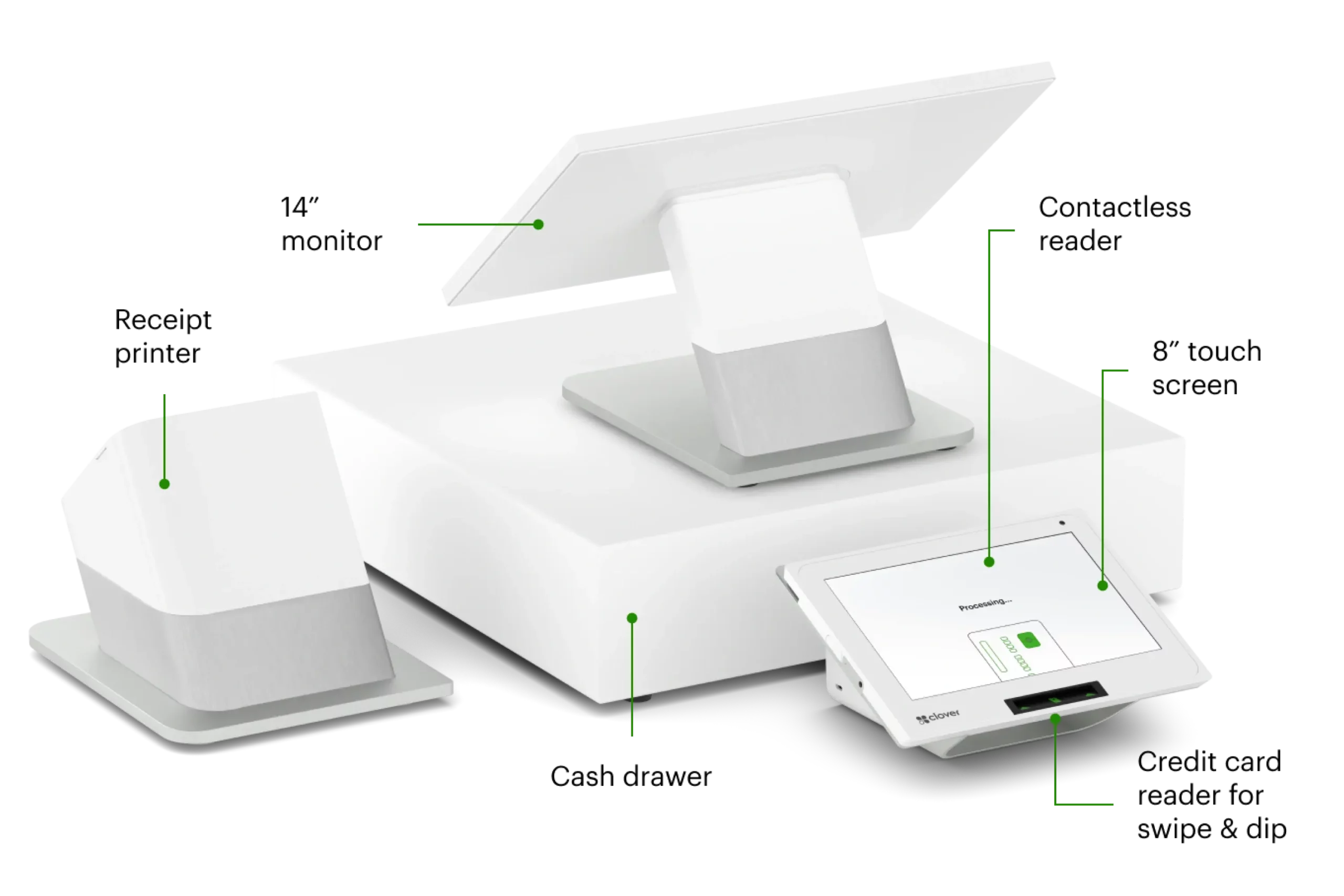
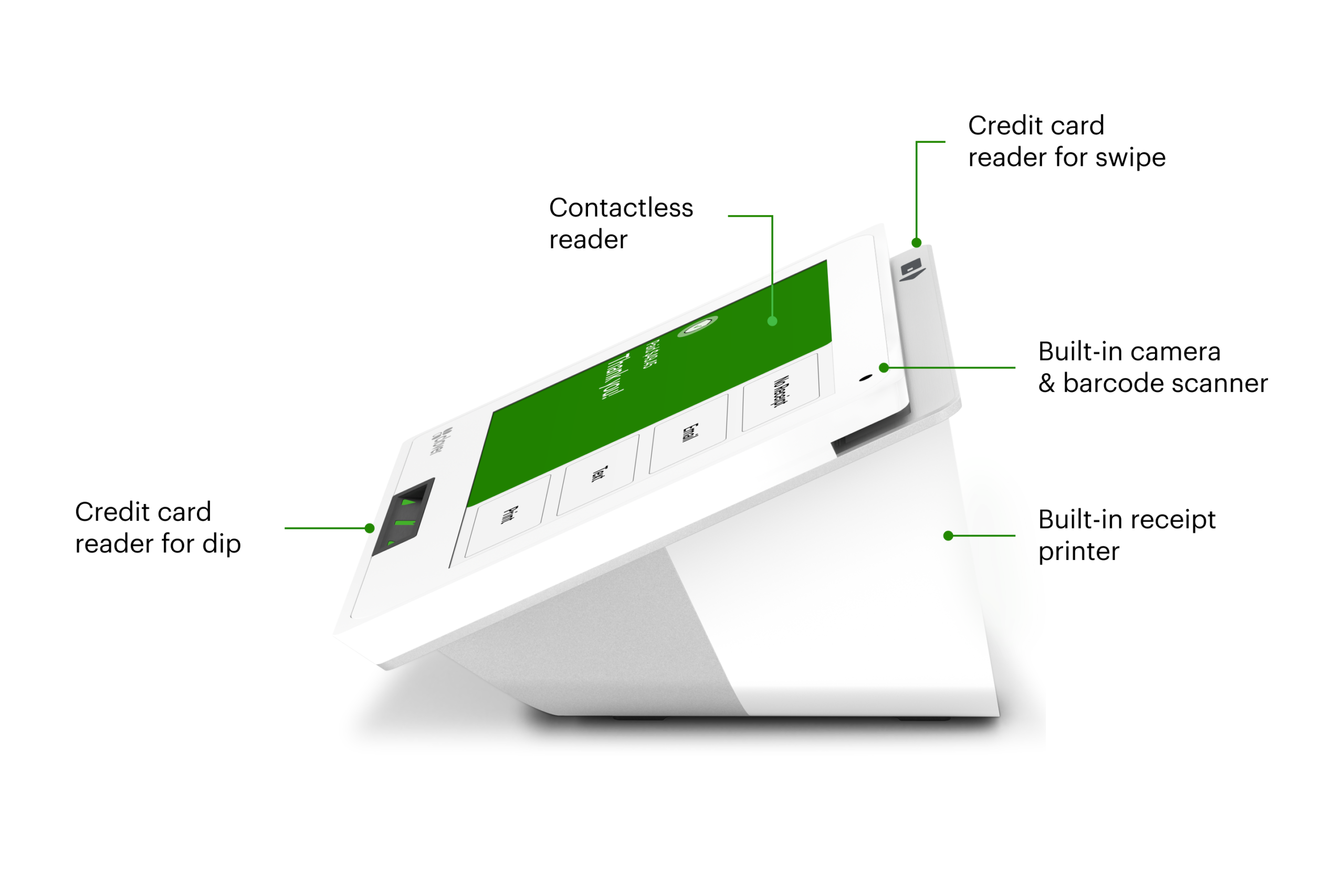
Retail hardware adds up: a till, a card reader, a cash drawer, a receipt printer, a barcode scanner, sometimes a label printer and a customer display. Bought outright, somewhere between $800 and $2,500 a station.
“Free hardware” almost always means a lease, and a lease is the most expensive and least escapable part of these arrangements. A $79-a-month terminal lease on a 48-month non-cancellable schedule is $3,792 for equipment worth a few hundred dollars, and it does not end when you leave the processor. Equipment lease fees, in full.
Buy the hardware if you can. If you lease, read the term, the buyout and the cancellation clause before signing, and understand that the lease is usually with a third-party finance company and not with the POS vendor at all — which is why leaving the POS does not end it.
There is also a quieter cost: proprietary hardware. A system that only runs on its own tills means your hardware is worth nothing the day you change systems, and you cannot buy a replacement printer locally when one dies on a Saturday.
Migration is the real cost
People choose POS systems as though the comparison were between two future states. It is not. It is between staying where you are and paying the cost of moving.
What moving actually involves:
Building the catalogue. Every product, price, cost, barcode, category, and variant. If you have 2,000 SKUs this is days of work, and it is the step that derails most implementations. Ask explicitly whether the vendor imports from your current system, and whether that import brings costs and barcodes or just names and prices.
Counting stock at cutover. Your opening quantities have to be right or the inventory function you bought the system for starts out wrong.
Training. Short, but it has to happen before go-live, not during.
Running two systems briefly. Plan for it. It is always a little messy.
Budget this honestly and the decision changes. A system that is 10% better than your current one is not worth a week of catalogue work; one that fixes an actual operational problem is.
A short list of things to test before signing
Ask for a trial and do these, in this order:
Ring a sale with a split payment. Part card, part cash. Surprisingly often awkward.
Process a refund on a card sale from a previous day. Then check the refund appears correctly in reporting and settles correctly.
Receive a purchase order of ten items and confirm stock updates and cost is captured.
Run a report you would actually use and see whether the number you want is in it.
Take the internet down. Ask what happens — offline mode, queued transactions, or a shop that cannot sell. For a retail floor this matters more than most features.
Export your data. Ask for a full export of products and sales history. A system that will not give you your own data back is a system you cannot leave.
Multi-location and the moment it changes
One shop and one till: most systems are adequate and you should pick on price and simplicity.
Two or more locations changes the requirement substantially. You need shared catalogue with per-location pricing, stock visibility and transfers between sites, consolidated reporting, and per-location staff permissions. Most of the cheap tier handles this badly or charges steeply for it.
If a second location is plausible within two years, weigh it now. Migrating one shop is a week; migrating three while trading is a quarter.
What we charge
Interchange + 0.50% + 10¢ in person, interchange + 0.75% + 25¢ keyed, with no contract, no monthly fee and no monthly minimum.
We work with open POS systems and we will tell you plainly when a bundled deal is actually competitive. The thing we would ask you to do before signing anything is price the processing separately from the software — because once the software is in, the processing is no longer a decision you get to make.
While we are on the subject
Is a POS worth it for a single small shop?
If you carry stock that has to be accurate and you are currently counting by hand and getting it wrong, yes. If you sell a handful of SKUs you know by heart, a terminal is cheaper and simpler.
Can I keep my processor and change POS?
Only if the POS allows outside processing. Many do not, and that is the clause worth finding before you commit to the system.
What about barcode scanning and label printing?
Table stakes. Every serious retail POS does both. It is not a differentiator and should not appear in a comparison.
How long does setting one up take?
Building the catalogue is the work, and it takes longer than anyone estimates. Budget real hours for it, or pay someone, and do it before you need the system live.